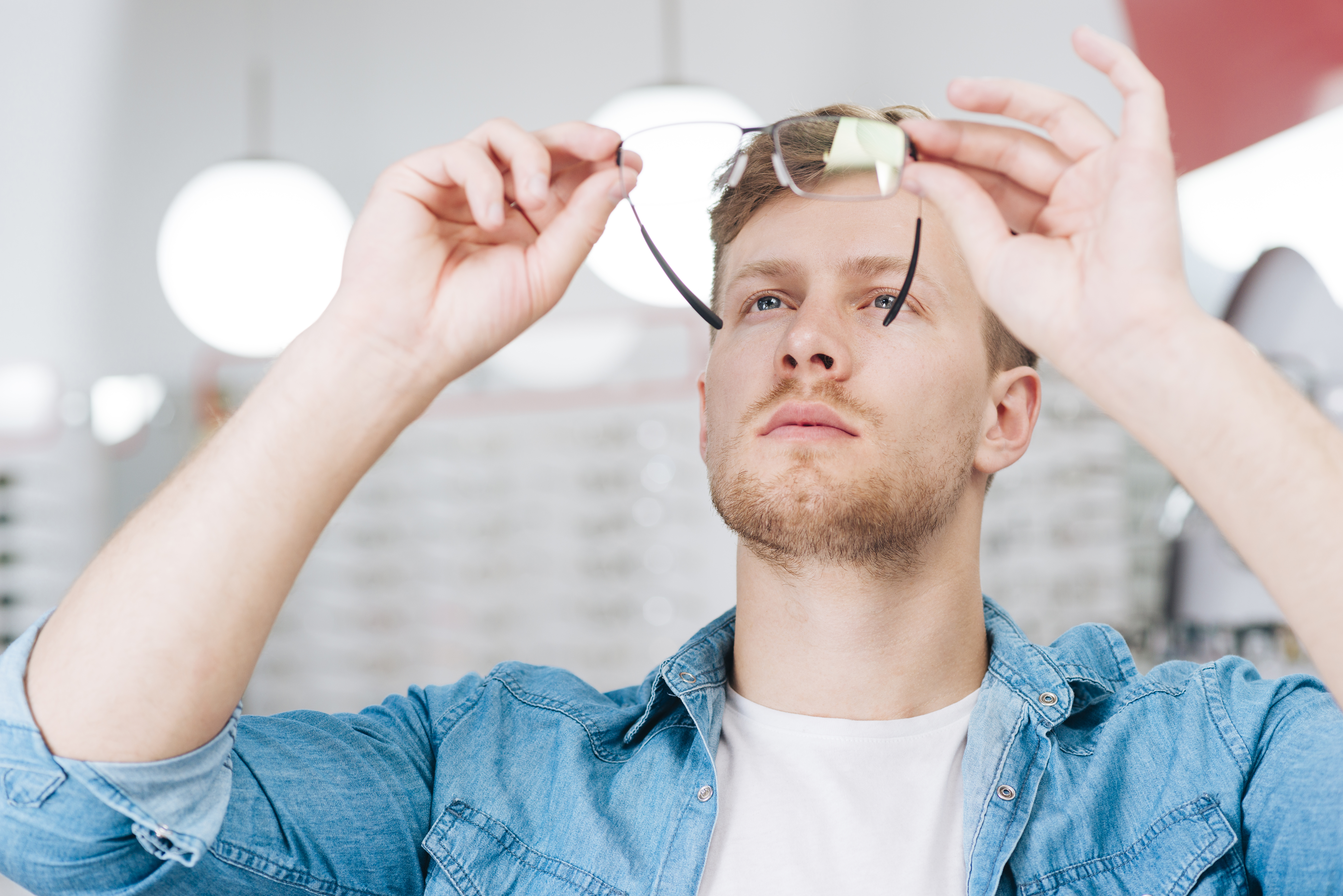


Rimless glasses have a clean, understated look, but their open design needs a little extra care. Since the lenses are not surrounded by a full frame, careless handling can put pressure on delicate connection points.
Dust, fingerprints, loose fittings, and improper storage can affect how your glasses look and feel. A few simple habits can help keep them clean and comfortable for everyday use.
Knowing how to clean rimless glasses also helps you avoid common mistakes, such as wiping dry lenses or using rough materials. The right cleaning routine takes only a little time and can help protect your eyewear.
Here’s how to care for your rimless glasses without putting unnecessary pressure on their delicate parts.
Rimless eyeglasses have lenses connected directly to the bridge and side arms, rather than held inside a complete surrounding frame. This gives them a minimal appearance, but their exposed edges and fittings need careful handling.
Because the lenses and connecting parts are more exposed, rough cleaning, accidental drops, or pressure can cause damage. Regular care helps keep your glasses clean while reducing unnecessary strain on their fittings.
Cleaning your glasses properly helps remove dust, fingerprints, and everyday marks without scratching the lenses. Always handle them gently and avoid applying pressure around the areas where the lenses connect to the frame.
Follow a simple routine to keep your rimless glasses looking clear and comfortable:
Start by rinsing your glasses with clean, lukewarm water. This helps remove loose dust and small particles that could scratch the lens surface during wiping.
Avoid using hot water, as sudden or excessive heat may affect certain lens treatments or materials. A gentle rinse is a safer first step.
After rinsing, apply a small amount of lens cleaner suitable for your glasses. Avoid household cleaners, soaps with strong ingredients, and products containing harsh chemicals.
These substances may affect lens coatings or leave unwanted marks. If you are unsure which cleaner to use, ask an eyewear professional.
Use a clean microfibre cloth to gently dry your lenses. Move it lightly across the surface instead of pressing down, especially near the lens edges and connection points.
Avoid cleaning your glasses with tissues, clothing, paper towels, or rough fabrics. These materials can leave fibres behind or create scratches over time.
Even after cleaning, the way you pick up and wear your glasses matters. Their open construction means that uneven pressure can affect the alignment of the lenses and side arms.
A few careful habits can reduce unnecessary stress on your lightweight rimless frames:
Use both hands: Hold both side arms when putting on or removing your glasses
Avoid touching the lenses: Handle them by the bridge or side arms where possible
Keep them away from pressure: Do not leave glasses under books, bags, or other objects
Remove them carefully: Avoid pulling one side arm away from your face
Handle children’s glasses gently: Teach children not to bend or twist their eyewear
These small steps can help your glasses maintain their shape and reduce the risk of accidental damage.
The screws and fittings connect the lenses to the bridge and side arms. Since these parts help hold the glasses together, checking their condition occasionally can help you notice problems before they become worse.
If your glasses suddenly feel loose, uneven, or unstable, inspect the connection points carefully. Look for visible gaps, movement around the fittings, or side arms that no longer sit evenly.
However, avoid tightening anything by force. The lens connection points need careful handling, and excessive pressure may damage the lenses or fittings.
If you notice a loose screw or fitting, take your glasses to an eyewear professional for adjustment. Avoid using household tools or trying to fix the connection yourself.
Professional attention is especially useful if a lens moves, a fitting becomes damaged, or the glasses no longer sit comfortably. This helps prevent a small issue from becoming more difficult to repair.
Proper storage protects your glasses when you are not wearing them. Leaving them on a table, inside a bag without protection, or near heavy objects can increase the risk of scratches and accidental damage.
A few simple storage habits can help keep your rimless prescription glasses in good condition:
Use a protective case: Keep your glasses in a suitable case when not in use
Choose a safe surface: Place them somewhere stable, away from edges
Keep lenses facing upwards: Avoid placing the lens surfaces directly against a table
Avoid hot environments: Do not leave glasses in direct sunlight or inside a hot car
Keep them separate: Store them away from keys, coins, and other objects that may scratch them
Making these habits part of your daily routine can help protect your glasses at home, at work, and while travelling.
Some everyday habits may seem harmless but can put unnecessary pressure on delicate eyewear. Avoiding them can make rimless glasses maintenance easier and help reduce preventable damage.
Watch out for these common mistakes:
Wiping dry lenses: Dust particles can create scratches during cleaning
Using rough materials: Tissues and clothing may damage lens surfaces
Applying too much pressure: Pressing around the lens edges can affect their fittings
Leaving glasses unprotected: Loose storage increases the chance of accidental damage
Attempting DIY repairs: Incorrect adjustments can make loose connections worse
If your glasses become damaged or noticeably misaligned, have them checked rather than trying to correct the problem yourself.
Regular cleaning is only one part of caring for your eyewear. Paying attention to fit, handling, and small changes can also help maintain your glasses over time.
For better durable rimless eyewear care, make these checks part of your routine:
Your glasses should sit comfortably without slipping, tilting, or pressing against your nose. If one side appears higher or the lenses seem uneven, arrange an adjustment.
Avoid bending the side arms yourself, as this may put pressure on the connecting points.
Pay attention to small changes, such as loose fittings, unusual movement, or visible damage around the lens edges. Addressing these issues early may help prevent further problems.
If you notice a crack or chip in a lens, stop wearing the glasses until an eyewear professional has checked them.
An eyewear professional can inspect the fittings, check the alignment, and clean areas that are difficult to reach safely at home.
This is particularly helpful if your glasses have become loose or uncomfortable. Regular checks also give you an opportunity to discuss any concerns about their condition.
Good maintenance starts with understanding how your glasses are constructed and what kind of care they need. If you are considering a new pair, look for eyewear that feels comfortable and suits your everyday requirements.
You can explore the Eyeglasses collection to compare different eyewear styles.
Keep your rimless glasses clean with a gentle routine. Rinse before wiping, handle the fittings carefully, and store your eyewear in a protective case. These simple habits can help prevent everyday damage and keep your glasses comfortable to wear.
At Chashmay, we understand that eyewear is part of your everyday style and routine. Explore our collections to discover frames that match your preferences and vision needs.
Your glasses deserve the same care you give to the things you value most. Explore Chashmay's Eyeglasses Collection today and find eyewear you'll feel confident wearing every day.
1. How Often Should You Clean Rimless Glasses?
Clean your glasses whenever you notice dust, fingerprints, or smudges. A gentle daily cleaning routine can help keep the lenses clear without unnecessary rubbing.
2. Can You Use Regular Glass Cleaner on Rimless Glasses?
It is better to use a lens cleaner suitable for eyewear. Household glass cleaners may contain ingredients that can affect lens coatings or surfaces.
3. Why Do Rimless Glasses Become Loose?
Rimless glasses can become loose because of everyday movement, accidental pressure, or changes around their screws and fittings. An eyewear professional can inspect and adjust them safely.
4. Can You Tighten Rimless Glasses at Home?
It is best to avoid tightening delicate fittings yourself. Applying too much pressure or using unsuitable tools may damage the lenses or connection points.
5. How Should You Store Rimless Glasses Overnight?
Keep your glasses inside a protective case on a stable surface. Avoid placing heavy objects on the case or leaving your glasses exposed to heat and direct sunlight.
 Subscribe For Exciting Deals and Offers