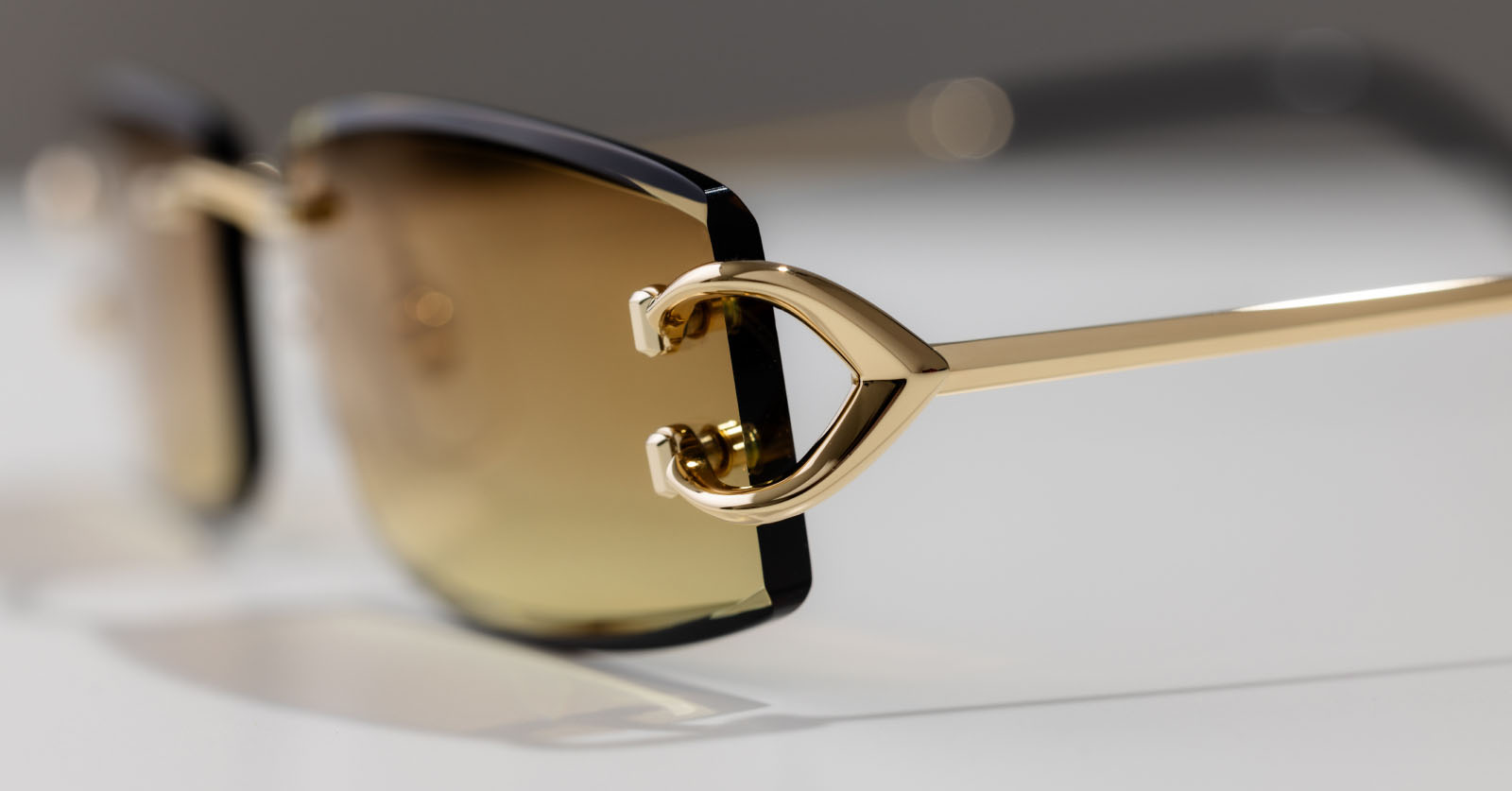
You put on a new pair of sunglasses, step outside, and suddenly something feels slightly off. Colours may look unusually warm, cool, dull, or intense. Straight lines might appear strange, and your eyes may even feel tired after wearing them for a while.
Some colour changes are intentional and caused by lens tint, while unwanted visual distortion can indicate poor optical quality, uneven lenses, or an unsuitable prescription. Understanding the difference helps you choose eyewear that looks good without making your vision uncomfortable.
This matters even more under Pakistan's bright sunlight, where clear and comfortable vision is essential for driving, commuting, outdoor activities, and everyday wear.
The simplest answer is that tinted lenses change the light reaching your eyes. Every lens colour absorbs certain wavelengths of visible light, so the world can appear slightly different when viewed through the lens.
For example, grey lenses generally reduce overall brightness while keeping colours relatively natural. Brown or amber lenses can make surroundings appear warmer, while other tints may noticeably change how particular colours look.
A colour shift alone does not always mean something is wrong. However, the change should feel consistent and comfortable rather than confusing, uneven, or distracting during normal use.
Different lens tints are designed to create different visual experiences. The amount and type of tint can affect brightness, contrast, and colour perception.
You may notice changes such as:
Green leaves appearing darker or slightly different
Blue skies looking deeper or less bright
White surfaces appearing warmer or cooler
Red and other colours appearing less vivid
For instance, a person driving in Karachi may notice that road signs or vehicle colours look slightly different through heavily tinted lenses. That can be normal, provided the image remains clear and colours are still easy to recognise.
Unwanted distortion happens when light does not pass evenly through the lens. Instead of producing a clear image, the lens can bend light inconsistently, making objects appear warped, blurry, stretched, or slightly curved.
This issue may become more noticeable when you move your eyes away from the centre of the lens. Straight edges, building lines, and distant objects can make the problem easier to spot.
Several factors can contribute to poor visual clarity:
Uneven lens surfaces
Inconsistent lens thickness
Manufacturing defects
Scratches or surface damage
Incorrect prescription lenses
Frames sitting improperly on the face
A useful test is to look at a straight line through the lenses and slowly move the sunglasses. If the line appears to bend, jump, or warp noticeably, the lenses may not be providing consistent optical clarity.
Not every pair of sunglasses provides the same visual experience. A lens may look perfectly fine from the outside while creating subtle problems when you look through it.
Poor optical quality can cause your eyes to work harder to maintain a clear image. Over time, this may make wearing the sunglasses uncomfortable, especially during driving or long periods outdoors.
For example, you may feel fine while briefly trying on a pair indoors. After wearing the same sunglasses outside for an hour, you might notice eye fatigue or feel that your vision becomes uncomfortable when looking around.
That is why appearance should never be the only factor when choosing eyewear.
Most people look through the centre of their lenses, where vision is usually clearest. Problems can become more obvious around the edges, particularly if the lens shape or surface is poorly made.
A small amount of visual change at the far edge may be less noticeable during everyday wear. Significant warping, however, can become distracting whenever you move your eyes instead of turning your head.
This can be especially frustrating for people who frequently drive, walk through busy areas, or need to observe movement around them.
Yes. People who need corrective lenses can experience distortion if their prescription is inaccurate or if the lenses are not properly positioned in front of their eyes.
Even a suitable prescription can feel uncomfortable when the optical centres of the lenses do not align correctly with your eyes. Frame fit also matters because the angle and position of the lenses can affect how you see through them.
This is relevant for people shopping for men's glasses or everyday prescription frames, as comfort depends on more than simply choosing a frame that suits your face.
If your vision appears distorted through prescription eyewear, it is sensible to have the prescription and lens positioning checked rather than assuming your eyes simply need time to adjust.
Polarised lenses can reduce certain types of reflected glare, particularly from flat surfaces such as roads, water, and vehicle windows. However, some people notice unusual effects when viewing digital screens or certain reflective surfaces.
For example, a mobile phone screen may appear darker or change in visibility when you tilt your head. This is related to how the screen and polarised lens filter light.
That does not necessarily mean the sunglasses are defective. It simply means different lens technologies can affect how particular surfaces and displays appear.
Even good lenses can become visually distracting after regular use. Fine scratches, surface wear, and coating damage can scatter light and make clear vision more difficult.
The problem may be most obvious when sunlight hits the lenses directly. You might see glare, hazy areas, or reflections that were not present when the lenses were new.
Proper storage can help reduce unnecessary damage. Keeping sunglasses loose in a bag with keys, coins, or other hard objects increases the risk of scratches.
Before committing to a pair, take a few moments to check how naturally you can see through the lenses. This is particularly useful when buying eyewear online and trying it on after delivery.
Look for these signs:
Straight lines appear bent or wavy
Objects seem stretched or compressed
One part of the lens looks clearer than another
Your eyes feel strained after short wear
Vision changes noticeably when you move your eyes
The left and right lenses appear visually inconsistent
You can also look at a door frame, window edge, or other straight object while moving your head slowly. A clear lens should provide a stable view without obvious warping.
The darkest lenses are not automatically the most comfortable. Lens colour, optical clarity, and how the lenses suit your surroundings can all influence your experience.
Someone spending time outdoors may prefer a different visual experience from someone who mainly wears sunglasses while driving or walking around the city. Personal comfort matters because your eyes respond differently to brightness and colour changes.
The same principle applies when choosing glasses for girls or other everyday eyewear. A fashionable frame should still provide comfortable, clear vision rather than forcing the wearer to adjust to distracting visual effects.
You should take the issue seriously if sunglasses consistently cause headaches, dizziness, eye strain, double vision, or significant visual warping.
A slight change in colour caused by lens tint can be normal. Persistent discomfort or distorted vision is different and should not be ignored simply because the frame looks stylish.
If the problem continues, have the eyewear checked and consider consulting an eye-care professional, particularly if you already use prescription lenses.
Good-looking sunglasses should also feel natural to wear. Before making your choice, pay attention to how your vision feels rather than judging the frame only by colour or style.
At Chashmay, you can explore a wide variety of eyewear styles while comparing options that suit different preferences, budgets, and everyday needs. The collection includes options for men, women, and children, making it easier to find a style that feels right for both your look and comfort.
Browse the sunglasses collection at Chashmay and take the time to choose a pair that gives you a comfortable view of the world along with a style you genuinely enjoy wearing.
Most tinted lenses can change colour perception to some degree because they filter visible light. The amount of change depends on the lens tint and its characteristics.
Bent or wavy lines can indicate optical distortion caused by uneven lens surfaces, poor manufacturing quality, or damage.
Yes. Scratches and surface damage can scatter light, create glare, and reduce visual clarity.
No. Persistent headaches, dizziness, or eye strain may indicate visual distortion, an incorrect prescription, or another issue that should be checked.
 Subscribe For Exciting Deals and Offers